

How Long Does Dental SEO Takes to Work? A Practical Timeline Guide
The Question Every Dentist Asks

If you’ve ever typed “how long does dental SEO take to work?” into Google while considering dental seo strategies, you’ve probably already guessed the answer longer than you’d like.
It's common to wonder how long does dental seo truly take.
And yeah, I get it. You launch a shiny new website, maybe you even hire a dental SEO agency, and then you wait... and wait for more patients . Nothing seems to happen for months.
It’s kinda frustrating, right?
But here’s the deal, SEO is not like running Google Ads. It’s more like orthodontics: slow, gradual, but it shifts everything underneath until suddenly, one day, it clicks.
So, let’s break down what actually affects the SEO timeline for dental practices, why it takes time, and what kind of results you can actually expect at 3, 6, and 12 months.
Oh, and I’ll drop in some real tools, data, and one little case story (because everyone loves a real example).
What Dental SEO is Slow on Purpose
Dental SEO or search engine optimization for dentists is basically how your website earns trust with search engines like Google, leading to better dental seo results through dental seo services.
So you can show up when people search stuff like “dentist near me,” “teeth whitening in Chicago,” or “dental implants cost.”
It’s not a switch you flip. It’s a long term digital marketing game built on three main things that form your seo efforts and seo strategy:
Search engine algorithms are constantly learning. They test your site’s relevance, reliability, and user experience over time.

So yeah, Google doesn’t trust you right away even if you’ve got a slick website.
If you want a solid starting point, I seriously recommend reading the Moz Beginner’s Guide to SEO. It explains how all this works without making you want to pull your hair out.
Key Factors That Affect How Long does Dental SEO Takes to Work
There’s no exact SEO timeline, but these are the big ones that can improve your local search results and make it faster (or slower):
1. Your Website’s Current State
If your dental website is brand new, you’re basically starting from scratch: no domain authority, no backlinks, no search history. That means Google’s gonna take longer to trust you.
If you’ve had a site for years but it’s poorly optimized (slow speed, messy structure, zero internal links), you’ll still need some serious cleanup first.
Run a quick SEO audit using reliable seo tools and develop a backlink strategy using Ahrefs or SEMrush to enhance your seo efforts. They’ll flag issues like broken links, missing title tags, or bad mobile optimization.
Pro tip: A well optimized dental website loads under 3 seconds and is fully mobile friendly because most local patients search on their phones.
2. Local Competition
This is a biggie. If you’re in Los Angeles or New York, where every other dentist is running SEO campaigns for better search visibility, expect things to move slower. The top spots are already crowded.
But if you’re in a smaller city or suburb, your SEO results can kick in way faster like in 3–4 months instead of 6–12.
That’s why local SEO is crucial. You want to dominate your Google Business Profile (that little map listing). Make sure:

Here’s a good read from BrightLocal on Google Business Profile optimization.
3. Content Quality and Consistency
Google loves fresh, useful, localized content.
If your blog hasn’t been updated since 2021, that’s a red flag. You need ongoing, high quality content blogs, FAQs, and service pages that answer real patient questions like:
Use tools like AnswerThePublic or Semrush Keyword Magic Tool to find what people actually search for and improve your keyword rankings .
4. Backlinks and Citations
Think of backlinks as “votes of confidence” from other websites that contribute to your backlink building effort.
When trusted dental or healthcare sites link to you, Google sees that as credibility, contributing to a stronger online presence .
You can earn these links through:
For local SEO, local citations matter too, as they enhance your visibility that’s your NAP (name, address, phone) consistency across platforms like Yelp, Healthgrades, and Zocdoc.
If you’ve got 10 different versions of your phone number floating around, fix that immediately.
5. Ongoing SEO Efforts
This one’s obvious but worth saying successful seo isn’t a set it and forget it thing; you need to continuously update your website content .
You can’t just optimize your site once and expect it to hold forever. Search engine algorithms evolve constantly. Competitors update their websites. New reviews appear.
That’s why successful dental SEO campaigns are always active:
The Real Dental SEO Timeline (Month by Month)
Alright, let’s get into what everyone actually wants to know how long it takes.
Here’s a realistic breakdown:
Month 1–2: Foundation & Fixes
This is the under the hood phase.
Your dental SEO company or agency will probably:
You might not see visible results yet. Don’t panic. Think of it as prepping the soil before planting anything.
Month 3–4: Early Movement & Content Growth
You’ll start to see small wins, maybe a few keywords moving up the search engine rankings, slightly higher traffic, or a few more local map views.
It’s not huge yet, but Google is testing you.
If your content quality is strong and users stay on your site, you’ll start showing up for less competitive searches like “emergency dentist near me” or “kids dentist in Plano.”
Month 5–6: Noticeable SEO Results
Around month 5 or 6 is when the magic starts to show up.
You’ll probably start to see improved search rankings and more traffic :
Most dental practices hit their first real ROI around this stage, especially as they see increased organic traffic.
Month 7–12: Authority and Expansion
By now, Google trusts you more. Your domain authority builds, backlinks grow, and your pages start ranking for higher-intent keywords through effective keyword research like “dental implants cost near me.”
This is where your seo process really shows as content starts compounding.
Old blogs keep ranking. Reviews help your local SEO. And you’re finally seeing that steady stream of new patients from organic search results.

Real Example: Dr. Sarah’s Case (Dallas, TX)
So here’s a quick example from dental marketing companies not made up fluff, but a common pattern.
Dr. Sarah launched her new dental practice in Dallas in January. She invested in a comprehensive SEO strategy with a local dental SEO company.
Here’s how it played out:
It wasn’t overnight, but by the 9-month mark, her investment started paying off big time.
Tools to Track Your Dental SEO Progress
Don’t guess track.
Here are a few free and paid tools every dentist or marketing manager should use:
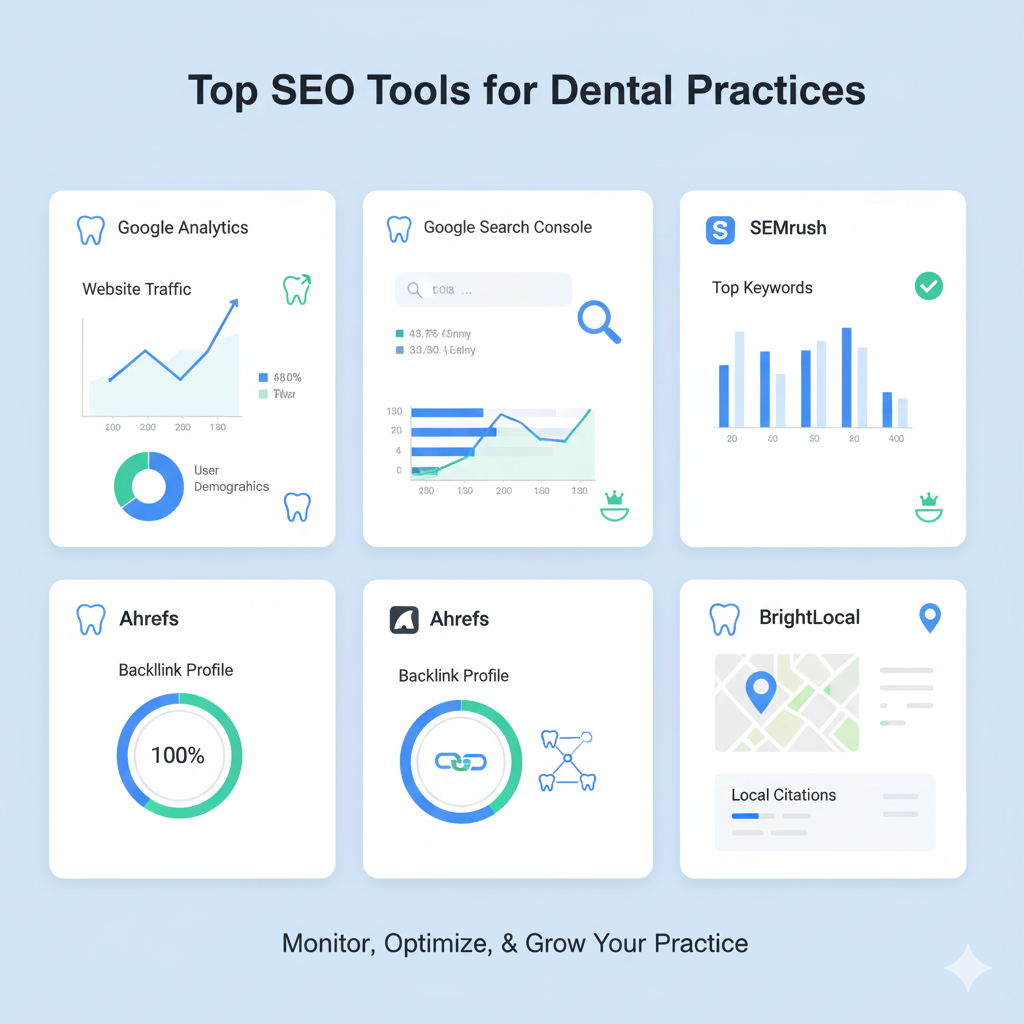
Side note: You don’t need to obsess over daily rankings. Check once or twice a month. SEO is a marathon, not a sprint.
Real Talk
SEO’s not sexy.
You don’t get dopamine hits like you do from running an ad and getting instant calls.
But what you do get is this:
And if you want to stay competitive in 2025 and beyond, you need both PPC+SEO working together.
Final Thoughts (Not a Perfect Wrap Up, But Real)
So yeah, how long does dental seo really take to work?
The short version: 3–6 months to move, 6–12 months to dominate.
But it’s not just time it’s effort consistency to ensure your dental practice remains competitive.
Google rewards patience and quality.
So keep your site fast, publish good stuff, earn honest backlinks through your dental seo efforts , respond to reviews, and check your analytics monthly.
Eventually, it clicks and you start appearing in the google search results .
One morning you’ll Google “dentist near me” and there you are, smiling from the top of page one.