

The Essential Guide to Spanish SEO for Dentists: Boost Your Practice
Alright, so if you’re running a dental practice and you’ve ever wondered why your “dentist near me” listings get zero clicks from Spanish speaking patients, this guide’s basically your caffeine shot.
We’re diving deep into Spanish SEO for dentists and not in that stiff, over optimized way everyone writes about SEO. We’re talking real, bilingual strategy that helps Hispanic patients actually find and trust you.
And honestly, it’s kinda overdue. Because here’s the deal: the Hispanic population in the U.S. is massive, and a ton of them search online in Spanish or at least mix English and Spanish (like “dentista cerca de mí” or “teeth cleaning barato”).
If your site’s not speaking their language (literally), you’re missing out on patients who already want dental services in your local area.
So yeah, let’s fix that.
Why Spanish SEO for Dentists Actually Matters
Let’s start with a reality check.

Search engines Google especially don’t magically know that your “dental implants” page is also relevant to “implantes dentales.”
They’re smart, but not psychic, which is why search engine optimization is crucial for visibility.
That means if you’re not optimizing for Spanish, you’re invisible to a big chunk of the community that could fill your chairs.
Here’s why it’s not just a nice thing to have:
Pro tip: Don’t just translate your site. Localize it. We’ll get to that in a sec.
Understanding Your Dental Practice Online (and What Google Sees)
So you’ve got your shiny dental website, your reviews, your Google Business Profile, and maybe some Facebook posts nobody reads. Cool. But how does that look through Google’s eyes?
Think of it this way your online presence is like your clinic’s lobby. Clean, easy to navigate, welcoming. But for search engines, it’s all about structure.
Google tries to understand what you do, where you are, and who you serve. That’s why optimizing your service pages, local citations, and local keywords, alongside Spanish keywords, matters so much.
If your dental site says:
“We offer teeth whitening and dental implants.”
But your Spanish patients are Googling:
“blanqueamiento dental” and “implantes dentales,”
Guess what? You’re invisible to them.
Read Another Article: Local Lead Generation Services
Keyword Research: Bilingual and Local
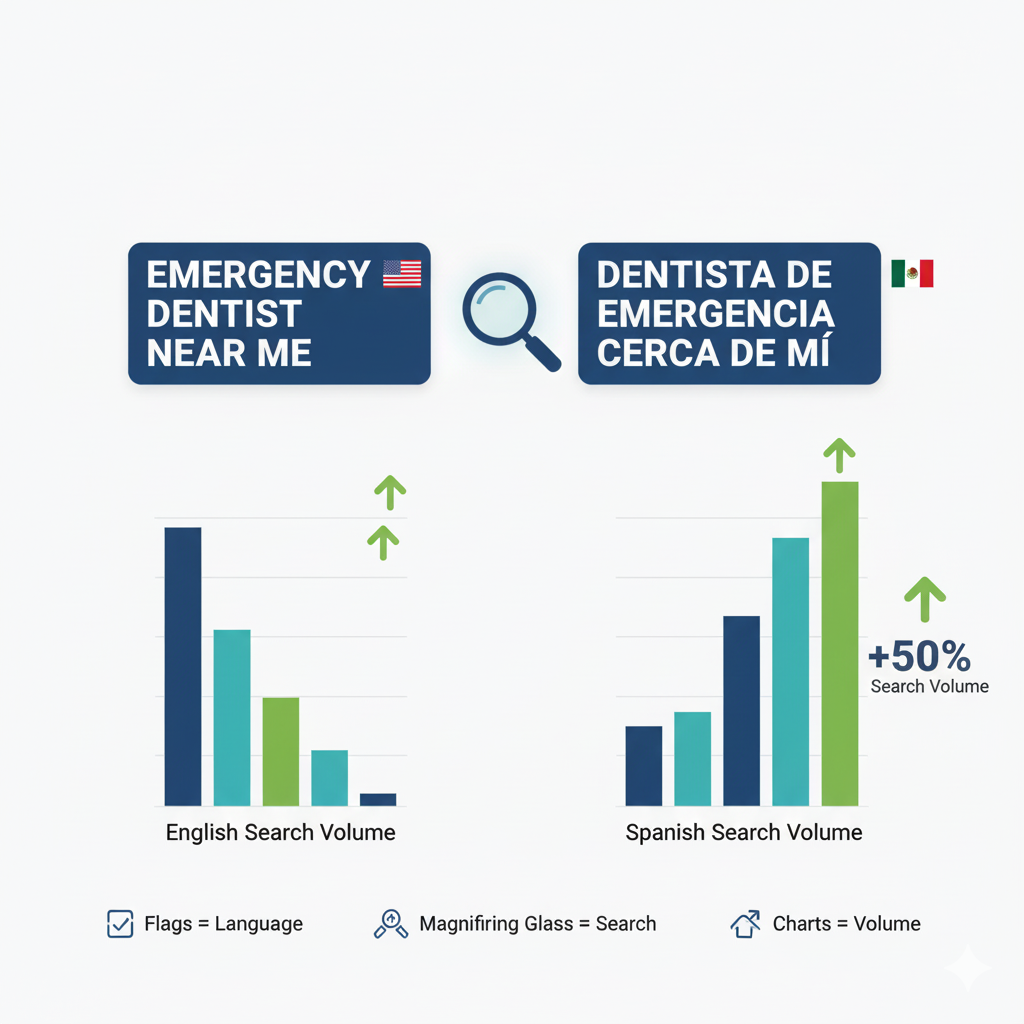
Okay, here’s where most dentist SEO campaigns mess up, keyword research. They use generic English phrases, and that’s it.
If you’re trying to reach Spanish speaking patients, you gotta do both English and Spanish research.
It’s not just about translation it’s about intent and using relevant keywords for both languages.
A quick bilingual example:
English Keyword | Spanish Keyword | Search Intent |
|---|---|---|
“emergency dentist near me” | “dentista de emergencia cerca de mí” | Find immediate care |
“pediatric dentist” | “dentista pediátrico” | Kids’ dental care |
“teeth whitening” | “blanqueamiento dental” | Cosmetic service |
“dental implants cost” | “costo de implantes dentales” | Comparison shopping |
Now how do you find these?
Use tools like:
Side Note: Add “en español” after your service in Google to see what people are actually searching and enhance your digital marketing strategy g.
Setting Up Your Bilingual Google Business Profile (GBP)
Your Google Business Profile (GBP) is like the front door to your digital practice. And here’s the thing: Google supports multiple languages.
Most dentists don’t use this. You can literally create a Spanish version of your profile with the same info, just localized.
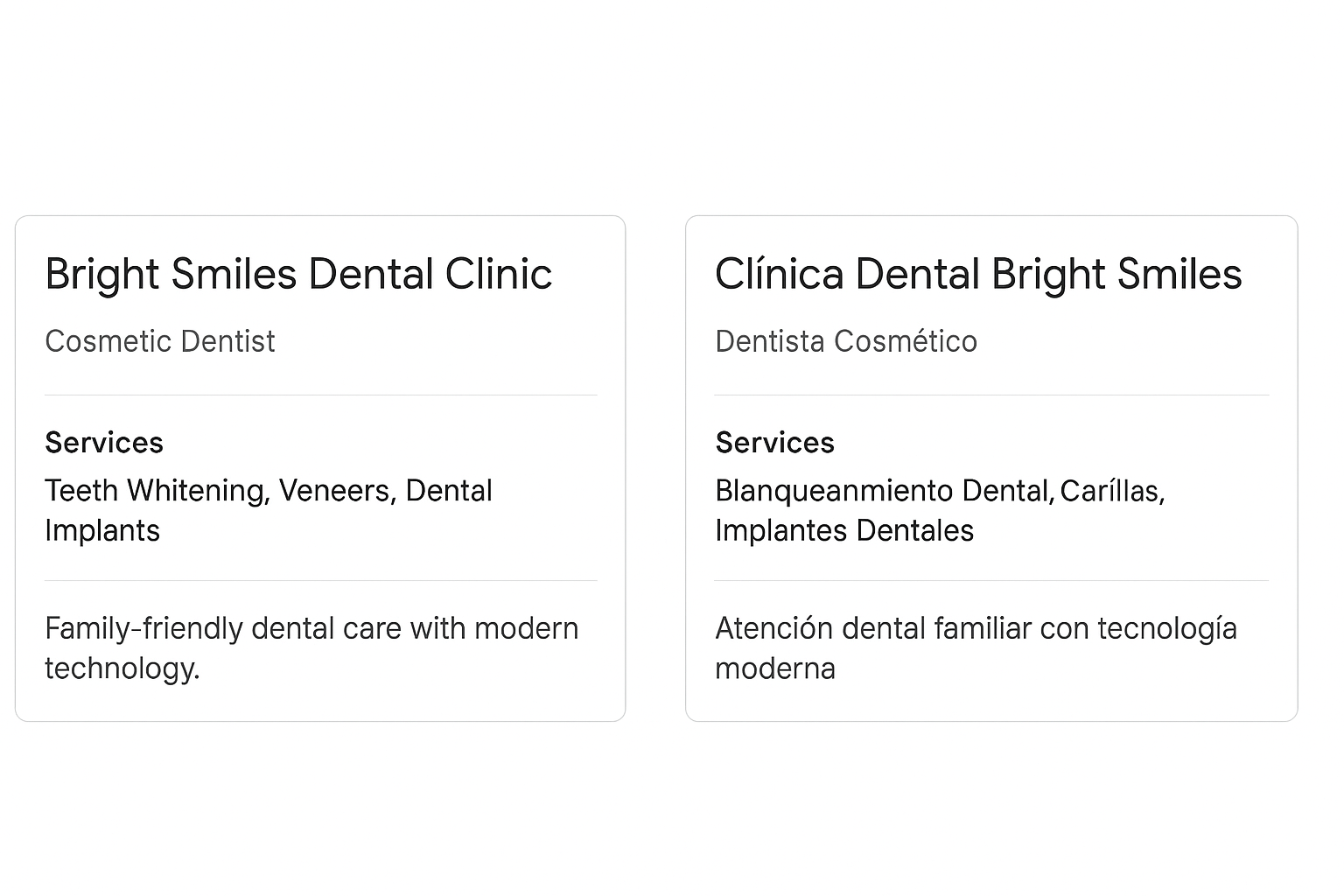
Example:
Field | English | Spanish |
|---|---|---|
Business Name | Bright Smiles Dental Clinic | Clínica Dental Bright Smiles |
Category | Cosmetic Dentist | Dentista Cosmético |
Services | Teeth Whitening, Veneers, Dental Implants | Blanqueamiento Dental, Carillas, Implantes Dentales |
Description | Family-friendly dental care with modern technology. | Atención dental familiar con tecnología moderna. |
Don’t overthink it just be consistent.
And don’t forget to add your NAP (Name, Address, Phone) exactly the same across all platforms: English and Spanish pages alike. Tools like BrightLocal can help audit your citations to make sure they’re all matching up.
Creating a Bilingual Dental Website (Without Breaking It)
So, should you create a separate Spanish site?
Short answer: No, not unless you have the resources to maintain it.
What you want is a bilingual structure. Something like:
/en/ (English version)
/es/ (Spanish version)
Or just a language toggle button on the main site. Don’t use auto translators they butcher nuance. Use an actual translator or copywriter who understands dental terms in both languages.
Add Spanish meta tags, too. For example:
<meta name="description" lang="es" content="Dentista de emergencia en Houston. Ofrecemos implantes dentales, blanqueamiento y limpieza profesional.">
And while we’re here make sure your service pages (like for “teeth whitening,” “dental implants,” or “emergency dentist”) have proper Spanish versions, not just machine translated junk.
Pro tip: Add internal links between English and Spanish pages like:
“Prefer to read this in English? Click here.”
It signals to Google that they’re related, and it helps users bounce between them easily.
Building a Local SEO Strategy That Speaks Both Languages
Alright, here’s where you get real traction.

1. Local Citations
List your dental practice on every major local directory but include Spanish friendly platforms too.
For instance, Yelp, Bing Places, Apple Maps, and even local Hispanic directories like “PaginasAmarillas.com.”
Keep your info (NAP) consistent. Seriously. One extra accent mark can confuse Google.
2. Local Backlinks
Partner with Spanish language community sites, dental blogs, or local health centers that write in Spanish.
A backlink from a trusted site with Spanish context can massively boost your local SEO rankings.
3. Schema Markup
This part sounds nerdy but it’s huge. Add bilingual schema data to your site.
Here’s a snippet for a Spanish service page:
{
 "@context": "https://schema.org",
 "@type": "Dentist",
 "name": "Clínica Dental Bright Smiles",
 "address": {
 "streetAddress": "123 Main St",
 "addressLocality": "Miami",
 "addressRegion": "FL",
 "postalCode": "33101",
 "addressCountry": "US"
 },
 "description": "Dentista de emergencia y servicios de implantes dentales en Miami.",
 "telephone": "+13055551234"
}
Google literally reads this like a map to your business.
You can check your schema using Google’s Rich Results Test.
Creating Content That Feels Human (and Spanish Friendly)
Now let’s talk content. Because even if you get all the technical stuff right, your content needs to connect.
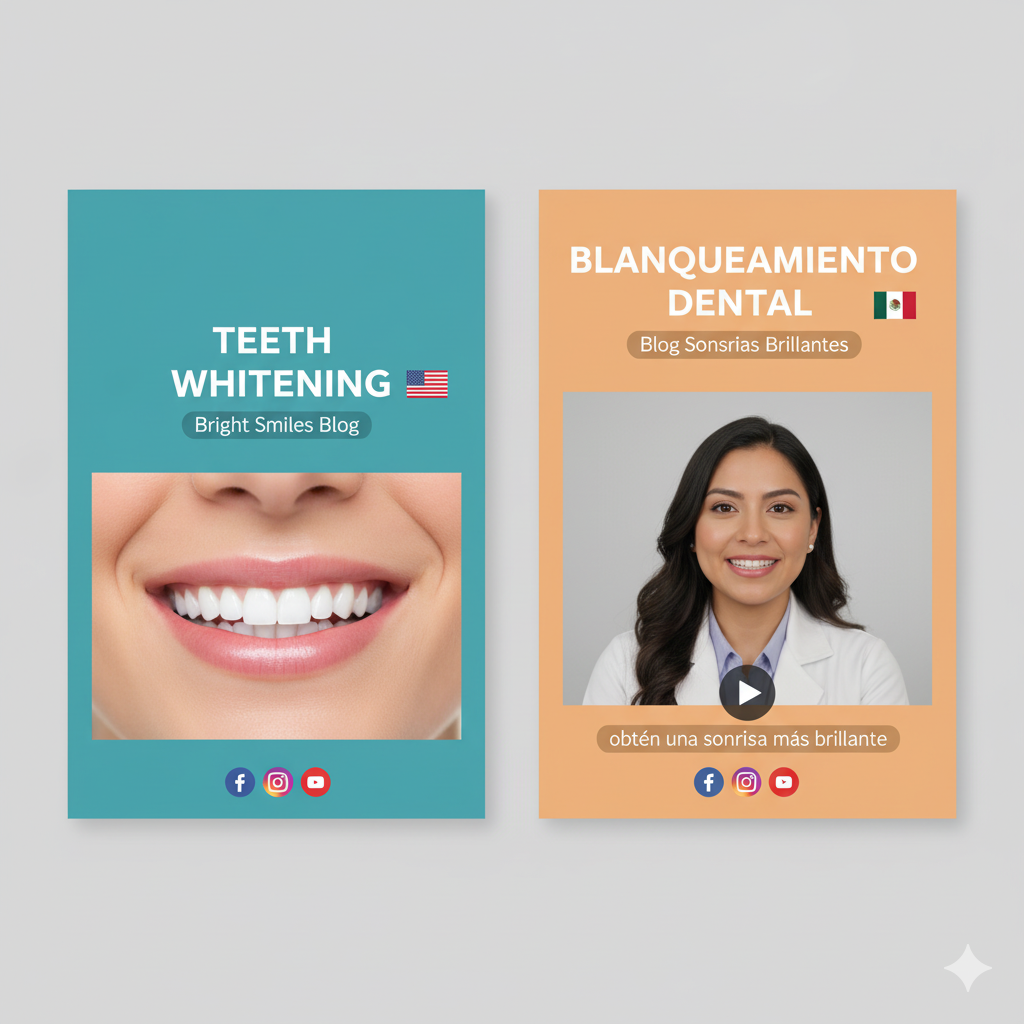
Don’t just translate culturally adapt.
When you write for English speaking patients, you might say:
“We offer same day dental implants with sedation.”
For your Spanish audience, you’d frame it like:
“Ofrecemos implantes dentales el mismo día con sedación segura para tu comodidad.”
See the difference? It feels softer, more comforting and that tone really matters in healthcare marketing.
Some content ideas:
And yeah, don’t worry about perfect Spanish grammar authenticity matters more than textbook accuracy.
Online Reviews (and Why Spanish Ones Count Double)
Here’s a fun fact most SEO “gurus” forget Google shows reviews in the same language people search in.
That means when a patient types “mejor dentista cerca de mí,” they’ll see Spanish reviews first in the search results .
Encourage bilingual reviews. Ask your Spanish speaking patients nicely: this can help you attract more patients.
“Si prefieres, puedes dejar tu reseña en español.”
And respond in the same language. It signals cultural fluency and builds massive trust.
You can even display Spanish testimonials on your site under a heading like “Lo que dicen nuestros pacientes”, which can drive more website traffic .
Technical SEO Tweaks (The Unsexy but Important Stuff)
Okay, let’s be honest this part’s boring but critical.
If your site loads slow or breaks on mobile, all that Spanish keyword work goes down the drain.
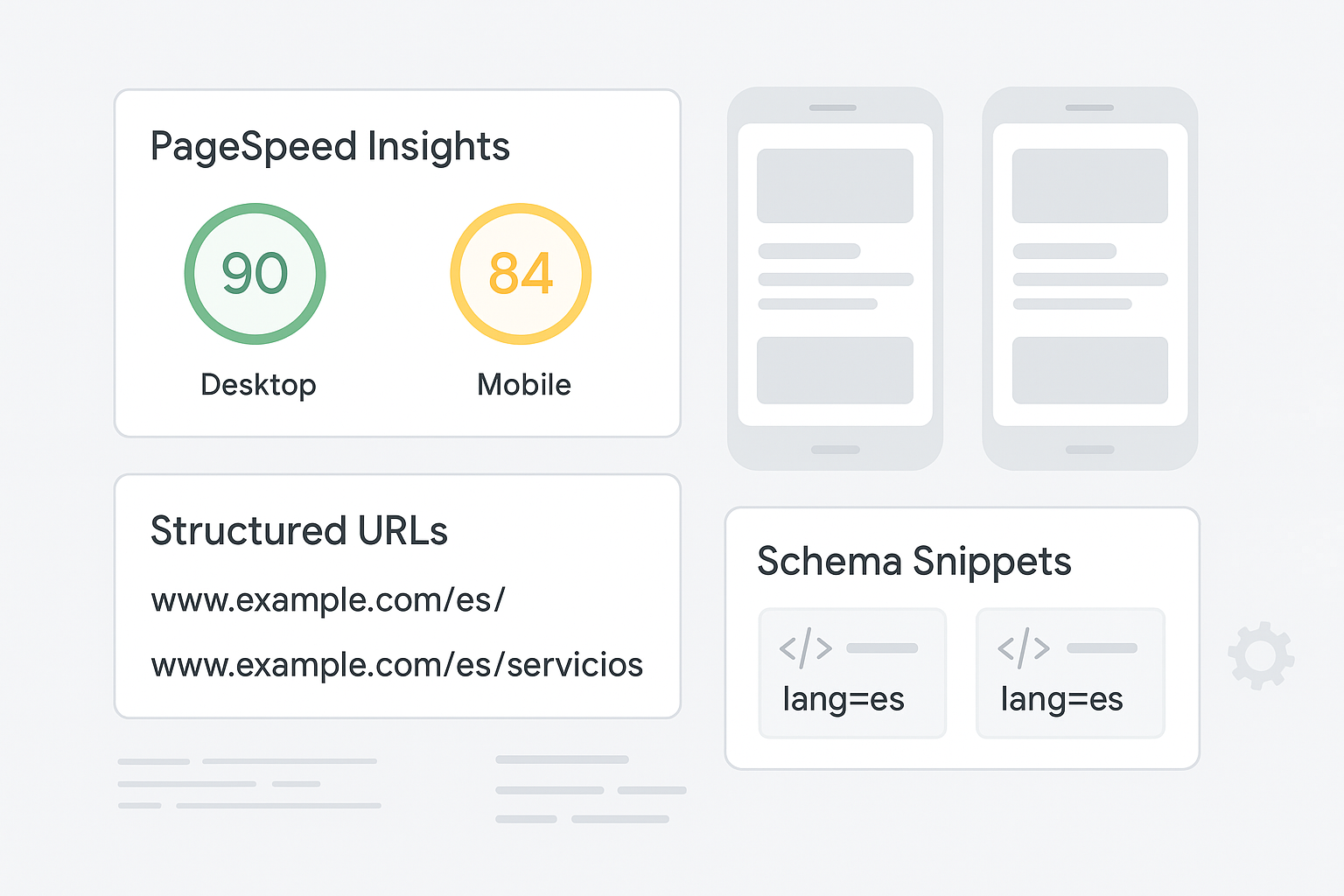
Key things to fix:
Social Media and Local Community Events
Look, not everything has to be about keywords.
Community engagement plays a role in SEO too Google picks up social signals.
Post bilingual stuff on Facebook, Instagram, or TikTok not just “look at this before and after” photos but actual community things like:
Mention your location and dental clinic name naturally in your captions.
Stuff like:
“La Clínica Dental Bright Smiles estará en el Festival de la Comunidad Hispana este domingo.”
This boosts local search visibility way more than people realize.
Patient Experience and Conversion Triggers
You could have perfect SEO, but if your patient journey sucks, they’ll bounce.
Here’s what to check:
If your user experience feels smooth in both languages, it builds trust and helps convert traffic into future patients.
Tracking and Measuring Your SEO Efforts
Don’t just set and forget. Track your bilingual SEO performance.
Here’s what to watch in Google Analytics or Search Console:
If you’re using Google Ads, try running Spanish ad variations.

Example:
“Implantes Dentales en Houston Agenda Tu Consulta Hoy”
You’d be shocked how cheap Spanish clicks are compared to English ones.
Common Mistakes Dentists Make in Spanish SEO
Let’s call out the usual suspects:
- Using Google Translate for entire sites. (Don’t.)
- Ignoring metadata. Your <title> tags and meta descriptions need Spanish versions.
- Not optimizing GBP descriptions that’s free SEO real estate.
- Inconsistent NAP across languages.
- Zero Spanish backlinks.
- Ignoring reviews in Spanish.
- Not tracking Spanish search data.
If you fix just half of those, your organic search visibility will jump.
FAQs About Spanish SEO for Dentists
Q: Do I need a separate Spanish domain?
Nah. A bilingual folder or subdomain works fine. Just keep things structured and internally linked.
Q: How many Spanish keywords should I target?
Start small 10 to 20 high intent local ones. Think “dentista de emergencia [city]” or “implantes dentales cerca de mí.”
Q: Should I hire a Spanish SEO expert?
If your area has a big Hispanic population, yeah, it’s worth it. You can find reliable ones through Moz’s directory or even specialized agencies on Upwork.
Q: Can I just translate my English blogs?
You can, but tweak the tone. Spanish readers value warmth and reassurance, especially in dental care topics.
Q: Will bilingual SEO mess up my English rankings?
Nope. If done right with proper tags (hreflang="es"), Google will understand it’s just another version of your site.
Final Thoughts
Look, I’ve worked with enough dental clinics to know this: most of you are doing 80% of the right things just in English only.
You don’t have to rebuild your site from scratch or hire some fancy agency. Just add Spanish visibility where it matters your Google Business Profile, your service pages, your reviews, and maybe one or two bilingual posts a month.
Spanish SEO for dentists isn’t some wild new strategy. It’s just respecting your actual audience.
You’re not just chasing clicks you’re helping patients who trust you because you speak their language.
So yeah, take a weekend, open your GBP, add a Spanish version, translate your “Contact Us” page, and tell Google (and your community), “sí, hablamos español.”
Trust me your waiting room will start filling up with new smiles faster than you think.